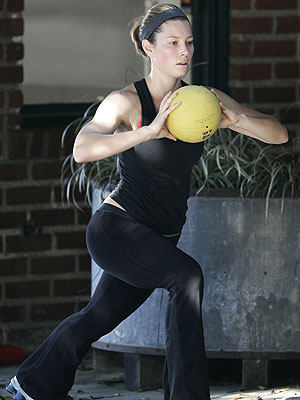
We will post some great training tips and workouts to help push you to the next level

Monday, November 28, 2011

Tips to make it through the holidays

Here are eight healthy holiday tips to keep you fit during the holidays.


Focus

Focus on daily behavior rather than long-term results during the busy holiday season. Set small, daily goals that are attainable in the short-term.
Prioritize

Your good health will make dealing with the intensity of the time of year easier. Don't be afraid to make your fitness and nutrition a priority. If necessary, schedule your exercise and eating times as you would a doctor or business appointment.
Relax

Don't over-obsess about your fitness and nutrition during the holidays; if you miss a training session or a meal, get back on track with the next scheduled item and make a mental note to do better next time—but stressing over it won't help.
Rest

Lack of sleep is one of the leading factors of raised stress levels, which, in turn, can cause your body's metabolic rate to slow down. Aim for seven to eight hours a night, but if that's unattainable, a couple of 15-minute breaks during the day to sit quietly and breathe deeply will do wonders.
When it comes to food, celebrate—but with control. Taking these few simple steps will help make sure that your nutrition doesn't suffer.
Watch Out for Carbs

Steer clear of processed carbohydrates. Foods containing enriched flour (pasta, breads, cakes, cookies, crackers, etc.) and processed sugar are the big culprits here, and remember: almost everything in a package contains sugar and/or sodium as a preservative. Also, homemade baked goods can be packed with saturated fats and sugars, so sample if you must, but know when to say no.
Snack Often

Go ahead and snack. Keep plenty of easy, healthy snacks at hand: almonds, apples, low-fat string cheese, whole-grain crackers, or a quality protein powder are easy to pack and keep stocked in strategic places such as your car, briefcase, gym bag, diaper bag, etc. Having good snacks readily available to nosh on every few hours will help keep you from reaching for holiday goodies that haunt your every step.
Have a Treat

Sugar-free Popsicles, sugar-free jello, sugar-free hot chocolate, diet sodas, tea sweetened with Splenda, Crystal Lite, are all good for curbing a sweet tooth, but remember, too much artificial sweetener is not conducive to good health, so practice moderation. Another alternative is extra-dark chocolate, but don't get carried away—square or two is plenty.
Hydration Equals Energy

Hydration will not only keep your system flushed but will keep your energy levels on high. Drink at least eight 8-oz. glasses of water a day, and avoid rich, sugary drinks like eggnog, cider, frothy seasonal coffee drinks and, of course, alcohol.

Tuesday, November 15, 2011

Foam rollers.. If your not using them your missing out

You may or may not be familiar with a foam roller, but if your serious about staying healthy then you should should check them out. A foam roller will assist you with stretching and aid in flexibility. A roller can be a valuable part of a healthy athletes warmup and cooldown routine

If you use a foam roller only to rehab injured muscles, you're not getting the most out of it. A roller—which looks like a firm log—can be a valuable part of a healthy runner's warmup and cooldown routine, says Michael Clark, Ph.D., a physical therapist and CEO of the National Academy of Sports Medicine. Rolling improves circulation, which gets the body ready for a workout and helps it recover afterward. And because rolling breaks down knots that limit range of motion, it preps muscles for stretching. Try these routines, moving slowly and stopping and holding on tender spots.

WARMUP Rolling increases blood flow and releases muscle tightness that can interfere with proper running form.

CALVES Put the roller under a calf. Rest your other foot on the floor. Roll from the ankle to below the knee. Rotate the leg in, then out. Stack ankles to add pressure.


ILIOTIBIAL BAND Lie on your side with the roller near your hip, rest your other leg's foot on the floor. Move along your outer thigh. Increase pressure by stacking your legs.


PIRIFORMIS Sit on the roller and place one foot on the opposite knee. Lean into one buttock and roll forward and back, using your supporting leg to control the pressure.


COOLDOWN Rolling flushes out toxins to help recovery. Start by rolling the calves and iliotibial band.
HAMSTRINGS Place the roller under your thighs. Roll from the knees to the buttocks. To increase the pressure, roll one leg at time, turning your leg in and out.


ADDUCTORS Lie on your stomach with one leg extended slightly to the side, knee bent. Place the roller in the groin area of the extended leg and roll the inner thigh.


QUADRICEPS Lie on your stomach with a roller placed under the front of your thigh and slowly roll up and down from the bottom of your hip to the top of your knee.

The rollers will improve your flexibility and recovery time which also means you will be out there playing even more.. So isn't that worth it?? So try one out!! Aren't you worth it?

Thursday, September 29, 2011

Overrated excersices .. Add a new twist to your workouts

It seems like most people I see in the gym use the same exercises. Some moves work and some are overrated

Doing the same workout over and over again isn’t just boring, it’s ineffective. When you repeat the same movements time after time, your body adapts, which limits your results. You can also develop strength imbalances and postural issues over time if you don’t mix things up. To get the most out of your workout, swap out some of your usual moves with new ones. Here are three to get you started:

Overrated: Traditional crunches

The crunch places unnecessary strain on your back, and it only targets the rectus abdominis.

Do This Instead: Plank with Hip Flexion

The plank with hip flexion trains your entire pillar—your shoulders, torso, and hips—while stabilizing your spine and improving posture to help you look and perform better. To do it, start in a push-up position with your hands beneath your shoulders and feet shoulder-width apart. Keeping your hips and torso still, draw one knee toward your chest. Return to the starting position and repeat with the opposite leg.


Overrated: Seated Machine Chest Press


When performing the seated machine chest press, your body has to follow a fixed path. This limits the range of motion in which you can build muscle and neglects important stabilizing muscles of your shoulders. Think about it this way: When the machine provides the stability, your body doesn’t have to.

Do This Instead: 1 Arm Bench Press

The 1 Arm Bench Press places the weight on one side of your body, forcing you to stabilize your body using your core. You’ll develop core strength and upper-body power that transfer to everyday activities and the sports field. To do it, lie face-up on a bench with your hips just off the edge of the bench. Hold a dumbbell at your shoulder in one hand and the bench behind your head with your other hand. Keeping your hips in line with your shoulders, press the weight over your chest and then lower it to your shoulder. Complete the set on one side, and repeat with the opposite arm.


Overrated: Seated Knee Extension


Knee extensions focus solely on your quads, but don’t help build strength and stability throughout the rest of your lower body.

Do This Instead: Split Squat - Back Foot Up

You’ll get a greater total-body workout with the Split Squat with Back Foot Up. This move benefits your quads, hamstrings, and glutes while building single-leg strength and stability to boost your performance.
Here’s how to do it: Stand tall in a split stance holding a pair of dumbbells with your weight primarily on your front foot and your back foot elevated on a bench. Lower your hips toward the ground by bending your front knee. Push through your front leg to return to the starting position. Finish your set on one side, and then repeat with the opposite leg forward.


Special thanks to Core Performance for helping us improve ourselves

Monday, August 1, 2011

Runners need to work out too!!!!

Run.. Run.. Run.. Run, it works if your a runner, but you really need to work out your upper body too!!!
Here are some simple exercises and all you need is a resistance band!

Train your whole body with pushing and pulling movements like the ones below—and don’t underestimate the importance of the upper-body exercises. As you run, your upper body acts to counterbalance your legs. A strong upper body will help you transfer energy more efficiently with each stride. Start with these moves to build strength and improve your running.

Half-Kneeling One-Arm Chest Press

Attach a resistance band to a stable surface like a door. Face away in a half-kneeling position with one foot on the ground. Hold the handle at your chest with the same hand as the down knee. Press the handle away from you until your arm is straight, then return to the starting position. Complete all your reps with one hand before repeating on the other side.

One-Leg Romanian Deadlift

Stand with a resistance band wrapped around one foot with your knee slightly bent, holding a handle in each hand. Hinge forward at the waist, lowering the handles as your other leg lifts behind you. Contract your hamstrings and glutes to return to a standing position. Complete a set on one side before repeating with the opposite leg.

Half-Kneeling One-Arm Row

Attach a resistance band to a stable surface like a door. Face the band in a half-kneeling position with one foot on the floor. Hold the handle straight in front of you with the same hand as the down knee so that there’s tension in the band. Initiating the move by squeezing your shoulder blades, pull your elbow behind you. Return to the starting position and repeat. Complete all your reps with one hand before repeating on the other side.

Split Squat

Stand tall in a split stance with your feet shoulder-width apart. Holding the handles at your shoulders, stand on the resistance band with your front foot to create tension. Lower your hips toward the ground by bending your knees. Without letting your back knee touch the ground, return to the starting position by pushing up with your front leg. Complete a set on one side before repeating with the opposite leg.

Make sure you get a complete body workout for the ultimate fitness!!!


Healthy hints courtesy of Core Performance

Monday, July 18, 2011

Rest to get stronger

A common misconception about fitness is that more is better. It’s an idea that one must work out or train 6 or 7 days a week and never take time away from working out. This cannot be further from the truth and in fact, adequate rest it just as important to a fitness program as actual time spent working out. A person who does not rest adequately risks both a physical and psychological breakdown due to the level of stress placed on the body.


To understand the importance of rest, it is important to understand how our bodies develop when involved in a fitness program. Contrary to common beliefs, the actual act of exercising does not build muscles. Exercising actually does the opposite as it causes tearing within the muscle. When we work out we are essentially breaking down and tearing muscle tissue. The muscle building is a result of the bodies ability to adapt. Once we have broken the muscles down, the body needs to repair them, our bodies will adapt to this new stress by repairing the muscles stronger than before in order to meet the new requirement for strength. Adequate rest is crucial for this process to be successful as we repair our muscle tissue during rest.

Lack of rest also increases the potential for injury. If a person works out 6 days a week, they are essentially breaking their body down without giving themselves enough time to recover. Often times, this will eventually result in an injury as the person does not have a chance to recover from the constant stress.

In addition to the physical requirements, there is also a psychological advantage to resting. Unless a person is a professional athlete on a strict schedule, it is common for people to overwork themselves to the point of physiological exhaustion. There is tremendous guilt associated with rest and eventually the person breaks down and has to stop working out all together. A proper understanding of the importance of resting would result in a more manageable program.


It’s not hard to see this in practice. Professional athletes, for example, work out for a living in order to be in peak condition. Most athletes need 2-3 off days a week. In addition, for sports like boxing, mma where they are training specifically to be at their peak on a specific day, athletes will take a week off of rigorous activity immediately before the competition in order to recover and reach their peak.

When it comes to requirements, it’s going to vary from person to person but generally I would say 2-3 days off a week. It’s always best to schedule the days off if possible as it tends to keep a person committed to the workouts. In addition to taking the weekly breaks, it’s also important to take a week or so off every few months. This is also a good way to recharge the batteries and stay excited about fitness.


Crosstraining can help, by switching up activities you can still feel like you have done something and get a good work out in. But.. Stay away from similar activities. If you are a runner, don't go for a hike, give your legs a break and go kayaking instead.

Keep in mind that good fitness is about balance, so hard work needs to be complimented with good rest. Don’t feel guilt about your time away from the gym because that is when your body really gets to work.

Thursday, June 30, 2011

5 things you should be doing after a workout

At the end of a workout, there’s a tendency to want to head for the showers and rush back to the pressing issues of the day. But how you transition via a brief recovery period will determine how well your body repairs itself and responds in the coming days. . Use this simple checklist to kickstart your body’s recovery process—and get the most out of each workout.

1. Reflect     

It’s important to recognize what you’ve accomplished with your training and how it contributes to your long-term vision, not just for your physical well-being and athletic pursuits but how such commitment is fueling your success. You’ll feel great in the short-term regardless, but it’s important to reflect on how you feel and connect it back to your goals. That reinforces the behaviors you’ve chosen and is something people don’t do nearly enough.

2. Track     

There’s no shortage of gadgets and smart phone apps to log training and measure progress. It can be a simple spreadsheet or even paper. The important thing is to track your workouts, not only to give yourself a pat on the back, but also to have a reference point for the following workout, or to review months later.

3. Stretch    

Active-isolated stretching is most effective after a workout when the muscles are warm. This can range from a full routine to the three or four stretches that address any mobility issues you might have. You can also do some reflection while you stretch. What worked and what could you do better during the next training session?

4. Refuel  

To refuel you body after a workout, consume a mixture of carbohydrates and protein immediately afterward, preferably within 10 minutes of training. At this point, your cells are wide open and screaming for nutrients, and by drinking a shake or another balanced carb/protein small meal, you expedite the recovery process and maximize lean muscle growth.

5. Cool down

If you have access to a 55-degree “cold plunge” tub, spending 1 to 3 minutes in it is a great way to decrease post-workout inflammation. Alternating between a cold plunge and a hot tub (three to five minutes) stimulates bloodflow and muscle recovery with hardly an effort. If you don’t have access to a hot tub or a cold plunge, you can get the same effect in the shower by switching between hot and cold settings.
 

Tips and Advice courtesy of Core Performance

Thursday, June 23, 2011

Why do we compete?

What is the point of sport?  Why do we compete?  Is it to win or is it to give it your best shot?


When we start off as kids I feel it’s more about health, fitness, socialization, learning life’s lessons and maybe more than anything else, it’s about having fun! But as we get older it becomes a lot more competitive. We begin to compete not just to play, but to make it to the next level.
Fun still is a huge part of it though, it takes an immense amount of work to reach the top level in sport (or any endeavor for that matter) and so you have to be doing something you love to do.
At Pro level, the higher you get the more is at stake, People want championships, it becomes a job to be the best. Athletes are expected to be at there best or risk being traded.
But at our level is it all about  winning? Sure everyone wants to win, but its not just about winning, its about trying to win.
There could only be one winner, so in races the odds of winning are slim, yet we still compete, we still try.. because we love what we do. It has to be more about winning, it becomes about the challenge and the effort to win.
So that is why we compete, to see if we can do it. To see how we fair against other like minded people. To push ourselves to our own personal limits and make it to the next level.


 So if you have never competed you should think about it, come out and give it your best shot, it gives you something to work towards and it will bring you to the next level.
Check out some of the Bad Ass Academy's up coming events and sign up, you will be glad you did!!

Bad Ass Academy


Tuesday, June 7, 2011

Should you train on an empty stomch in the morning?


A lot of people think its ok to train on an empty stomach every morning, but they are doing there bodies an injustice. While cardio first thing before breakfast can help you lose additional weight, for any real training its best to eat something.
If you don't eat before you train, your performance will suffer at higher intensities and longer durations. When you wake up, your body is in a fasted state. You might have trouble just turning on Sports Center without a cup of coffee, so you can't expect to perform your best without fueling up and hydrating first.

If eating early upsets your stomach, experiment with different foods rather than skipping breakfast entirely. Try food that's easy to digest like a bowl of cereal, two slices of toast with one tablespoon of peanut butter, a 16-ounce sports drink, or a glass of juice. Aim for 30-60 grams of carbohydrates for breakfast with 10-20 grams of protein and a little healthy fat to balance off your meal.
The body doesn't care what form the fuel comes in—a meal, gel, bar or drink. What matters is getting the nutrients necessary to support your training session. Make it a habit and you'll stay focused and power through your workout, increase strength and power, and burn more calories during your session.

Thursday, June 2, 2011

Bad Ass Academy.. Who we are, what we do..


The Bad Ass Academy.. Who we are and what we are about.
 
 
We believe that hard work pays off in the end.
We believe that people have to push themselves to really find out their potential.
We believe getting out there and pushing your limits makes you stronger
We believe that working out just isn’t about lifting weights.
We believe quitting is not an option
We believe in teamwork
We believe that your body can take much more punishment then you think
And that you will come back stronger
We believe that even though it might hurt a little , its going to be fun.
 
Bad Asses are a bunch of people who love to get out and do something…anything. Some run, bike , hike, trail run, kayak, rock climb etc. They get out there everyday and do it, rain or shine, in the heat or the cold they are out there. They do it because they love it, they do it because it feels good.
 
The Bad Ass Academy brings it to the next level. Throughout the year we have several events that will help you push yourself. Each event is a unique challenge. Unless you have been to one of our events you really cant understand, you’ve never seen anything like it. Our goal is to have  people to come out, compete, have some fun, and leave with a smile.
 
So far we have had a 6hr Mountain bike endurance race and a 6hr endurance trail run. Each of these events had challenges within them, making it not your average ride or run.
 
I watched as one girl rode her bike up to one of our challenges. It was a teeter totter, she originally planned to dismount and walk past it, but something changed her mind. She backed up, concentrated for a minute, took a deep breath… then headed straight for it!!!
Going up she looked a little nervous, but as it started to come down she had the biggest smile on her face , it lasted for the rest of the day.
 
I also watched a guy attempt the larger teeter totter at full speed.. as he got to its peak he started going off the side, next thing you knew he was on the ground landing pretty much on his back. Everyone ran over to him to see if he was ok. He just bounced up with a huge smile and said “ that was awesome”, got back on his bike and rode away.
 
One guy finished a lap with 20 minutes left in the race, he was exhausted and could barely move. He could have stayed and relaxed for the last few minutes but he was here to race, and went back out to do another lap.
 
The stories are endless. But they all end the same way. Bad asses have heart, determination, and a desire to excel. We are different from the average person.
 
So check out our list of events on Badassacademy.com. Come race, suffer a little and have fun. I know you will leave with a smile on your face!!!
 
Our next event is The Bay Ridge Bad Ass Challenge on June 25th!!! It’s a two person %k race, with plenty of obstacles to slow you down, come check it out.!!!!!
 

Wednesday, May 11, 2011

Want to run faster?????

One of the training methods used to improve speed in sports is known as sprint-assisted training. The idea behind sprint-assisted training is to increase your stride rate by forcing your body to perform at a higher level than would be possible without assistance. Sprint-assisted training produces this effect by getting the nervous and muscular systems used to higher contraction rates. After several weeks, the nervous system allows you to continue these higher rates without any help. Research shows that your number of steps taken per second and the length of your stride can improve after 4-8 weeks of sprint-assisted training.

Four commonly used methods of sprint-assisted training are downhill sprinting, high-speed cycling, towing (pulling) against the resistance of surgical tubing, and high-speed treadmill sprint training.
 here are some Guidelines


  1. Develop a solid conditioning base of speed endurance training and weight training before beginning a sprint-assisted program.
  2. Warm up thoroughly before any type of sprint-assisted training.
  3. Use only correct sprinting technique when engaged in sprint-assisted training. Errors in form are likely to be exaggerated by sprint-assisted training.
  4. Perform sprint-assisted training only on a soft grassy area.
  5. "Work fast to be fast." Training must include work at a high level of intensity.
  6. Expect to have muscle soreness for a day or two after the first sprint-assisted training session. This soreness is a sign that the technique is taking you beyond your normal training routine.
  7. Use sprint-assisted training at the beginning of a workout, right after your warm-up routine.
  8. Follow instructions regarding rest between each repetition and sprint-assisted session or activity. The goal of sprint-assisted training is to take faster and longer steps, not to improve your conditioning for short sprints.
  9. Stay within the 10 percent zone on all repetitions. Do not run more than 10 percent faster than your normal unassisted sprinting speed.
  10. After sprinting with the assistance of a pull or decline, try to maintain the high speed for an additional 10 meters.
  11. Progress slowly from one-half to three-quarter to maximum speed over a period of two to three weeks.
- Helpful hints by Core Performance -

    Thursday, April 28, 2011

    Creative ideas to cut out some carbs.

    People are always worried about carbs. Carbs are not always a bad thing, our bodies need them for sustained energy. Too many carbs without exercise can be a way to add on some pounds.
    Here are a few Carb substitutes for those looking to cut out some carbs.


    Substitute: Squash for potatoes

    Summer squash (the football-shaped yellow kind) tastes similar to potatoes when cooked—but has just a fraction of the carbs. Grate the squash, mix in an egg as binder, make patties, and fry them in olive oil.

    Carbs Eliminated: About 15 grams (g) per hash-brown patty

    The Taste: "Not as firm and crispy as regular hash browns, but the potato flavor is there."


    Substitute: Cauliflower for potatoes

    Steam some fresh or frozen cauliflower in the microwave. Then spray the cauliflower with butter substitute, add a little nonfat half-and-half substitute, and puree in a food processor or blender. Salt and pepper to taste and you've got something that quite honestly can compete with the real thing any day. To make it even better, try adding roasted garlic, cheese, or sour cream to the mixture.

    Carbs Eliminated: 30 g per cup

    The Taste: "After a couple of bites, you forget it's not potatoes."


    Substitute: Zucchini slices for noodles

    Slice four to five medium-size zukes lengthwise into three-quarter-inch-thick strips. Sprinkle Italian seasoning on the strips, place them in a single layer on a nonstick cookie sheet, and bake at 425 degrees F for 20 minutes. You want them firm, not crisp. Then simply make the lasagna as you normally would, replacing lasagna noodles with the baked zucchini.

    Carbs Eliminated: 36 g per serving

    The Taste: "Delicious. The zucchini provides texture that you don't get from noodles alone."


    Substitute: Spaghetti squash for spaghetti

    A cooked spaghetti squash is like Mother Nature's automatic spaghetti maker—the flesh becomes noodlelike strands. All you have to do is cut the squash in half and remove the seeds. Then place each half—cut side down—on a plate with a quarter cup of water. Nuke the squash for 10 minutes or until it's soft to the touch. Let it cool, then scrape out the "spaghetti" strands and top with pasta sauce and cheese.

    Carbs Eliminated: 30 g per cup

    The Taste: "Great. Spaghetti squash has exactly the same consistency as real pasta."


    Substitute: Oatmeal and cottage cheese for pancake mix

    Here's a can't-fail recipe from The South Beach Diet. Mix together half a cup of old-fashioned oatmeal, a quarter cup of low-fat cottage cheese, two eggs, and a dash each of vanilla extract, cinnamon, and nutmeg. Process in a blender until smooth. Cook the mixture like a regular pancake.

    Carbs Eliminated: 45 g per pancake

    The Taste: "With syrup, you could never tell the difference."


    Substitute: Tempeh for potatoes

    You may think you don't like soy-based foods, but that could be because you don't cook them right,Tempeh can be really bland, but if you jazz it up with herbs and spices, it's a great substitute for potatoes. Saute a couple of cups of thinly diced tempeh with garlic and onions. Then pour a cheese sauce (sharper is better) over the tempeh cubes and bake for half an hour.

    Carbs Eliminated: 11 g per cup

    The Taste: "Just like a slightly nutty baked potato."


    Substitute: Diced vegetables for macaroni.

    Even instant mac and cheese can go lower-carb; use only half the pasta in the box and bulk it up with a couple of cups of frozen mixed vegetables.

    Carbs Eliminated: 13 g per cup

    The Taste: "I hate broccoli, but I wouldn't mind eating this."


    Substitute: Mixed vegetables or black beans for half the pasta

    Same idea as the mac and cheese, but try black beans, diced tomatoes, and chunks of ham, tuna, chicken, or hard-boiled eggs. These kinds of salads are a blank slate, so you can top them with anything from a creamy blue-cheese dressing to vinaigrette, or even lime juice and slices of avocado.

    Carbs Eliminated: 10 g per cup

    The Taste: "Awesome. I don't miss the extra pasta at all."


    Substitute: Low-fat string cheese for chips

    Just crazy enough to work: Cut sticks of string cheese into quarter-inch-thick slices and scatter the rounds on a cookie sheet coated with nonstick spray, leaving them an inch or two apart. Bake at 375 F for 4 to 5 minutes or until the cheese melts and turns golden brown. Let them cool, then peel the chips off the tray.

    Carbs Eliminated: Up to 90 g per serving

    The Taste: "Like the cheese you pull off the top of a pizza."


    Substitute: Portobello mushrooms for pizza crust.

    Cut the gills out of the inside of the mushroom,then place the mushroom on an oiled cookie sheet and bake for 5 to 10 minutes so it dries out slightly. Add tomato sauce, mozzarella, and pepperoni or other toppings and broil until the cheese begins to melt.

    Carbs Eliminated: About 20 g per slice

    The Taste: "Like pizza, but moister. Give me a fork!"


    Substitute: Eggplant for pasta

    Mixing diced eggplant with ground beef is healthier and more highbrow than this old skillet special—call it moussaka American style. You have to soften the eggplant first. Cut it in half, brush it with olive oil, and then broil for 10 to 20 minutes. Let it cool, dice it up, and mix with hamburger, tomato sauce, and spices.

    Carbs Eliminated: 26 g per cup

    The Taste: "Exactly like Hamburger Helper, in a good way."


    Tips and advice taken from Men's Health Magazine

    Tuesday, April 12, 2011

    Why do we workout?? It's not just about muscles

    The greatest challenge in developing a permanent exercise habit is finding motivation that lasts. It’s easy to get to the gym when you’re preparing for that big beach vacation or want to look great for your high school reunion. But what about the rest of the time?


    It's easy to hit the gym with a vengeance for a few weeks.
    Start to look noticeably better.
    Enjoy your found vanity.
    Lose motivation and stop working out for a few weeks.
    Repeat from beginning.
    Vanity, it turns out, isn’t a great longterm motivator for most people. You need to associate exercise with rewards beyond physical appearance then you can be able to get to the gym 5-6 times a week without any lapses.
    To help you bring consistency and enthusiasm to your exercise schedule, here are some powerful reasons to work out that have nothing to do with looking good.
    1. Testosterone
    This one is mostly for the gents (sorry ladies) and it applies to weight training. Testosterone is the essence of manhood. When you lift weights and gradually increase the level of resistance, your muscles produce testosterone. This gives you the energy, stamina, and aggressiveness you need to take on the world.
    On days after a big weight training work out, I’ve experience a significant increase in energy. I tend to pop out of bed (I’m usually groggy) and feel more vigorous over the course of the day.
    2. Clarity and Concentration.


    An active body has been linked to an active mind. The more consistently you exercise, the less prone you’ll be to grogginess and lapses in concentration. As anecdotal evidence of this, my best cure for writer’s block has always been going for a long walk, run, or hitting the gym.
    3. Reflection
    Exercise is a time to let your mind unwind while your body does the work. Strangely, when you stop actively trying to solve a mental challenge, the solution often pops into your head. Exercise is an opportunity for your subconscious mind to put together the pieces.
    4. Enjoyment
    Working out needn’t be seen as a chore or obligation. There are tons of enjoyable ways to exercise. For example, if you live in a scenic area, going for a run or bike ride along a beautiful route can brighten things up. Since I moved to Los Angeles a couple months ago, running on the beach has gotten me out the door much more frequently.
    Other great options include: using exercise as a chance to spend time with friends and family, playing a sport or game, striving to achieve new personal bests, week after week.
    5. Cleansing
    Have you ever gone a couple weeks without exercise and noticed that you begin to sweat an exorbitant amount? That’s because sweat, along with toxins, tends to build up over time. Sweating regularly through exercises removes these toxins and will help you feel more comfortable.
    6. Better Sleep
    Studies have shown that exercise improves sleep. I love my sleep, so this is big for me.
    7. Longer Life.


    When you choose to exercise, you’re making an investment, not just in your present physical appearance, but in the rest of your life. People who exercise regularly live longer and stay healthier into old age. If not for yourself, consider the family members that love and depend on you.
    8. Stress Relief
    Exercise has also been shown to reduce stress. This is a combined result of the benefits of cleansing, reflection, and a physical outlet for frustration.
    9. Superior Strength and Endurance
    About 4 years ago I went through a rough stretch where I gained 15-20 pounds in only a few months. Being unfit drastically changed the way I could move my body. It threw off my balance and made everyday tasks more difficult and uncomfortable. By exercising regularly, you’ll be better able to live and act, and in the event of an emergency, seize the moment.
    10. Self Confidence
    The sum of all these benefits is self confidence. (And, yes, looking good will help here too.) Greater self confidence is drives success, so its value can’t be underestimated. Exercise and fitness are an enormous part of reaching your potential.

    Monday, April 4, 2011

    Whats the best to prepare for an endurance event??

    A: Your training depends on the type of race, since adventure races can vary so much, consisting of everything from mountain biking to rappelling. But let’s look at three basic factors that will impact both your performance and risk for injury on any course:

    1. Terrain


    If you prepare just on a treadmill, you won’t be prepared for the terrain. If you're racing on trails, it’s important to train on them, say, once a week at first, but do it on a short, medium intensity day just to get your body used to those higher impact forces.

    2. Endurance


    Slowly build up your distance much like you would for a marathon. Like marathon training, you should incorporate short days and long training days each week.

    3. Strength.


    If you fatigue during the race at the hips, trunk, or shoulders, your body will be more likely to break down and the last thing you want is aches, pains, or injuries. Avoid the hurt by adopting a resistance training routine that builds strength, stability and power.

    Courtesy of Core Performance

    Thursday, March 24, 2011

    3 interval training plans to build fitness fast

    Less time in the gym doesn't mean you have to sacrifice fitness if you know this secret: Interval training. Research shows that interval training—workouts in which you alternate periods of high-intensity exercise with low-intensity recovery period—increases fitness and burns more calories over a short period of time than steady-state cardio (you know: just doing the same thing for your whole workout time).


    So how do you get the most out of interval training, and how long should each push and recovery be? One of the many great things about intervals is that there's no single hard-and-fast rule. Different lengths of work and recovery bring different benefits—and they're all good.
    Start with these three interval training plans. Just know this: Interval training is tough, so if you're just starting to work out, spend a few weeks to a month building your stamina with cardio workouts before adding interval training to your routine. Add these interval training plans to your gym routine once a week to burn more calories, build more fitness, and get out of the gym faster.

    1. Cardio Blaster
    This is one of the best interval training workouts you can do to improve fitness. It burns lots of calories in a short amount of time.

    How to do it:
    Warm up for 15 minutes.
    Then run, bike, or row for 3 minutes at 90 to 95 percent of your maximum heart rate (should feel like 8.5 or 9 on a scale of one to 10). Take three minutes active recovery (you're still moving, but at an easy pace) and repeat the 3 on/3 off pattern three to four more times.
    Finish with a 10-minute cooldown.
    Bonus benefit: This workout is like weight training for your heart—it strengthens your cardiovascular system, which improves your overall health.

    2. Speedplay
    Sprinting is great for tightening and toning your legs, glutes, and core. It increases your muscle power, which helps you push harder and makes your non-interval training workouts feel easier so you can challenge yourself and burn even more calories.

    How to do it:
    Warm up for 15 minutes, adding a few 20-second bursts at the end to prepare for the workout.
    Run, bike, or row for 30 seconds at a nearly all-out effort. Take three minutes active recovery and repeat the 30 on/3 off pattern five or six more times.
    Finish with a 10-minute cooldown.

    3. Cardio-Sprint Pyramid
    This adds sprint interval training for a fast and fun workout. Here, after each burst of hard work, you'll recover for the same amount of time.

    How to do it:
    Warm up for 15 minutes, adding a few 20-second bursts at the end to prepare for the workout.
    Run, bike, or row: During the work periods, you should have a rate of perceived exertion (RPE of 8 to 10, followed by 30 seconds of active recovery.
    Build and taper the workout like this:

    30 seconds sprint/30 seconds recover
    1 minute sprint/1 minute recover
    2 minutes sprint/2 minutes recover
    4 minutes sprint/4 minutes recover
    2 minutes sprint/2 minutes recover
    1 minute sprint/1 minute recover
    30 seconds sprint/30 seconds recover
    Finish with a 10-minute cooldown.

    Bonus benefit: This major calorie-burning interval training plan gives you the best of both worlds—high-octane cardio and muscle-sculpting sprints.

    Sunday, March 20, 2011

    Train Short, Go Long... Training for endurance events doesn't have to be as hard as you would think


    If a typical week of exercise for you involves 60 minutes of perspiration every other day, pat yourself on the back. Why? Because that level of commitment puts you well on the way to running a marathon, biking a hundred miles, even taking part in a triathlon. You just need to step things up a notch and you'll discover an amazing little secret: Training for long-distance endurance events needn't be torture. The next level is within your reach, and getting there is easier than you think.


    Ramp Up To A Marathon


    There's no reason completing 26.2 miles on foot has to be brutal: The average time for San Diego's Rock 'n' Roll Marathon in 2000 was a safe and sane four hours, 30 minutes for men and five hours, ten minutes for women—enough time to hit the john at mile six, walk through every water station, and hug your loved ones at mile 20. To get you to a triumphant finish, distance-running expert Jenny Hadfield, co-author of Marathoning for Mortals, has come up with an 18-week program that "allows you to finish with dignity." Hadfield has good reason for her regimen of short workouts. "It takes time to adapt your body to a marathon's high mileage," she says. "Push it and you risk hurting yourself." Apart from long runs every Saturday, you'll spend only two to three hours a week in your running shoes. Hadfield's plan assumes you've been logging five miles, three times a week, for at least three months. Now, on Mondays and Thursdays, run at a pace that makes it a little too hard to talk at the same time. On Tuesdays, cross-train with yoga, swimming, weight lifting, or biking to keep your whole body fit. Go for an easy run on Wednesdays or complete one of the following, as noted on the chart: (A) Run hard for five minutes; walk briskly for one minute; repeat sequence three times; (B) run hard for ten minutes; walk briskly for two minutes; run hard for ten minutes; walk again for two minutes; or (C) run hard for 20 minutes. For Saturday's longer runs, your pace should allow you to have a conversation.

    Reach 100 Miles on your bike


    Unless you just biked the Tour de France, few cycling experiences inflate an ego like watching a bike's odometer hit triple digits on the same day it registered zero. And cycling into shape for those 100 miles takes less time than you think. Try two months.  30 miles a week for at least two months before starting the regimen. That breaks down to slightly less than 20 minutes a day. Once you begin, a little math will make your workouts sharper: On Tuesdays, concentrate on maintaining a high cadence for 30 minutes; calculate yours by multiplying by four the number of times one foot goes around in 15 seconds.Aim for 80 rpm or higher,. When you can, increase ride time to an hour. With Thursday's ride, you're going to build leg strength on climbs that take at least five minutes to complete. No steep hills? Then find inclines too long to sprint all the way up and sprint up them as far as you can. If you're feeling strong, go for 90 minutes. On Saturdays, stick to a pace that will guarantee you finish the ride.

    Saturday of week eight is century day: Carry enough food and liquid to last for three hours and cruise through the first 50 miles without stopping. That way, your century will probably take around seven hours instead of ten

    Monday, March 14, 2011

    Spring Training tips

    After a long winter of reduced activity or inactivity you might be tempted to get outside and train as soon as the weather improves. You may also be tempted to exercise at the same level you did at the end of the last season. But such enthusiasm often leads to early season injuries. If you changed your routine for the winter, you need to get back into shape slowly. Here are some tips to keep in mind as you head out the door this spring.

    Slow but Steady. Don’t succumb to the weekend warrior syndrome. Try to get some exercise 3-4 times per week on alternate days. One of the best ways to get injured or sore is to go hard all weekend and do nothing during the week.

    Monitor Your Level of Exertion. Use the perceived exertion scale, the talk test, or the heart rate range to help you determine an appropriate intensity level. Stay at the lower end of the scale (11-13) and build up over several weeks.

    Increase Your Training Slowly. Increasing training (mileage, time or amount of weight lifted) more than 10 percent per week increases your risk of injury. To avoid this, increase your training gradually over the weeks.

    Avoid All-Out Efforts Until You Build a Solid Base of Fitness. Depending upon how much inactivity you had over the winter, it could take as long as 6 weeks to re-establish a solid fitness base. Start your exercise program with slow, steady aerobic sessions. When you add intervals or all-out efforts, make sure you allow enough rest and recovery (at least 48 hours) between those hard effort training days.


    Follow a Training Program and Keep Records. If you really want to build back up to optimal fitness, it helps to establish a training plan and stick with it. There are many training programs for all types of sports and having one is not only good motivation, but it helps keep you from doing too much too soon.

    Cut Yourself Some Slack. If you took the winter off, don't expect to be back to peak fitness in a week or two. It's ok to go slow and just enjoy being outside again. There's plenty of summer left, so don't worry about going a bit slower in the beginning.

    Train With Others at Your Fitness Level. If you can find a few people with the same fitness level and goals as you it can help kept you progressing at a good pace. Training with those who are farther along will only encourage you to overdo it, get injured or feel ‘behind’ in your training. Workouts with more fit people can be motivating and help you improve, but only after you have a good solid base to work with. Otherwise they can be harmful.


    Remember to Have Fun. Keep in mind that this is Spring Training which is a time for fun, light-hearted exercise. You aren't competing and you aren't burnt out yet. So just relax and
    enjoy your activity.

    Thursday, March 3, 2011

    Getting back into things... Slowly


    It's been a long , cold, snowy winter. It's hard to keep up with your normal training schedule when it's miserable out, it's easy to just stay inside and relax in the warmth of your own house.. We know we've all been there.
    Here's the good news.. It's March and things are warming up. After such a long hiatus we are dying to get back out there and go..go..go.
    It's important to ease your way back into shape. Most people start training at the same levels they left off at once it started getting cold, but your body needs a few weeks to get back into shape.
    The first few weeks of getting back into your fitness routine, try cutting your intensity by about half to three-quarters. Keep in mind that this is just for the first few weeks, so don’t feel like you’re backtracking.
    The main reason for starting off slowly is to limit the chances of becoming sore, so that you can complete the first few weeks of training easily.
    It takes a little bit more to refresh your cardio fitness than your muscular fitness. Get into it slowly. You can start out slower, or alternate your harder workouts with easier ones more often for a few weeks. The best way to judge is by listening to your body, don't be afraid to take a day off if you need too.
    Don't forget to stretch !!!
    Our last post talked about stretching and it's importance. Once your body is warmed up, make sure you stretch out, but there is no need to over do it. Stretching will help reduce soreness as well.
    Nutrition:
    We all know a well balanced meal not only is good for our bodies, but it makes us feel better as well.

    Let's welcome spring with open arms and get out there slowly, but surely.

    Tuesday, March 1, 2011

    Quick and easy stretches to make you faster

    We all know stretching is good for us, but do we always stretch before an activity? What about after?

    Believe it or not its just as important, if not more important to stretch after your workout.
    Here are some stretches to get your body moving..


    Note: All running stretches should be performed for about 10 seconds or so.

      Arm Stretches

    • Stand upright and try to reach the back of your left shoulder with your right hand. Use your left hand to help push your right hand farther back. Do the same with your other hand/arm.
    • Put your right arm in the air and bend it so that your elbow is behind your head. With your left hand behind your head, grab your right elbow with your left hand and pull left. Switch.

      Hamstrings Stretch


  1. We call this stretch “hang”. Standing upright, simply bend over forward and let your arms hang down. Your knees do not have to lock, but make sure to keep your legs straight. If you have never done this stretch before, you probably won’t get close enough to touch your toes. But if you hang long enough, you will get closer (and by doing this stretch more often, you will become a lot more flexible). Repeat with your right leg over your left leg and then with your left leg over your right leg.

    Quad Stretches


  2. We call these stretches “Flamingos”. Standing upright, bend your right leg back and hold your right ankle with your hand. To help maintain your balance, find a nearby wall or a running partner, or grab your ear with your free hand to counterbalance. Repeat with your other leg.


    •  We call this stretch “hang”. Standing upright, simply bend over forward and let your arms hang down. Your knees do not have to lock, but make sure to keep your legs straight. If you have never done this stretch before, you probably won’t get close enough to touch your toes. But if you hang long enough, you will get closer (and by doing this stretch more often, you will become a lot more flexible). Repeat with your right leg over your left leg and then with your left leg over your right leg.

      Quad Stretches

    • Standing upright, bend your right leg back and hold your right ankle with your hand. To help maintain your balance, find a nearby wall or a running partner, or grab your ear with your free hand to counterbalance. Repeat with your other leg.
    •  Stand with your legs apart and bend down, as if you were performing a squat. Place both palms down on the floor and use your elbows to stretch your legs outward. You will definitely feel the burn.

      Groin Stretch

    •  Sit on your butt and place the soles of your feet together, so that they are touching and stick your knees out to the sides. Try to move your feet as close to your groin. Initially, you will not be able to get as close, but will with time. It will also help to try and bend down to touch your nose to your feet too, but definitely more advanced.

    Hip & Lower Back Stretches

    • Position so that you are going to do a butterfly stretch,            except  straighten your left leg and using both hands, try and touch your left toe. Do the same with your right leg.

    • Sit on the ground with your right leg crossed over the left. Grab and hug your right knee, so that you feel the back of your leg (lower butt) stretch. You can also put your left arm over the right knee and twist your body clockwise. While stretching your lower back, you can crack your back as well. Switch to stretch your left leg.

    • Calf/Achilies Stretch

    • Get in a push-up position, but place your right foot over your left foot and stick your butt up in the air and flatten your left foot. Depending on how high in the air you stick your butt and how flat your make your foot, you will feel your calf muscle stretch. Make sure you don’t pull your calf muscle this way, but also be sure that you do feel a burn in the first place. Do the same with your left calf.
    If you follow these  stretches (more or less in that order), you will help lengthen and strengthen your muscles, allowing a better range of motion for your arms and legs. All this, in turn, helps you perform better and run faster at runs and races, without doing much else.


  3. We call these stretches “Hurdles”. Position so that you are going to do a butterfly stretch, except straighten your left leg and using both hands, try and touch your left toe. Do the same with your right leg.


  4.  


  5. We call these stretches “Hurdles”. Position so that you are going to do a butterfly stretch, except straighten your left leg and using both hands, try and touch your left toe. Do the same with your right leg.


  6.      


  7. We call these stretches “Hurdles”. Position so that you are going to do a butterfly stretch, except straighten your left leg and using both hands, try and touch your left toe. Do the same with your right leg.


  8. Sit on the ground with your right leg crossed over the left. Grab and hug your right knee, so that you feel the back of your leg (lower butt) stretch. You can also put your left arm over the right knee and twist your body clockwise. While stretching your lower back, you can crack your back as well. Switch to stretch your left leg.


  9. We call these stretches “Hurdles”. Position so that you are going to do a butterfly stretch, except straighten your left leg and using both hands, try and touch your left toe. Do the same with your right leg.


  10. We call these stretches “Hurdles”. Position so that you are going to do a butterfly stretch, except straighten your left leg and using both hands, try and touch your left toe. Do the same with your right leg.


  11. Put your right arm in the air and bend it so that your elbow is behind your head. With your left hand behind your head, grab your right elbow with your left hand and pull left. Switch.

    Hamstrings Stretch


  12. We call this stretch “hang”. Standing upright, simply bend over forward and let your arms hang down. Your knees do not have to lock, but make sure to keep your legs straight. If you have never done this stretch before, you probably won’t get close enough to touch your toes. But if you hang long enough, you will get closer (and by doing this stretch more often, you will become a lot more flexible). Repeat with your right leg over your left leg and then with your left leg over your right leg.

    Quad Stretches


  13. We call these stretches “Flamingos”. Standing upright, bend your right leg back and hold your right ankle with your hand. To help maintain your balance, find a nearby wall or a running partner, or grab your ear with your free hand to counterbalance. Repeat with your other leg.


  14. Put your right arm in the air and bend it so that your elbow is behind your head. With your left hand behind your head, grab your right elbow with your left hand and pull left. Switch.

    Hamstrings Stretch


  15. We call this stretch “hang”. Standing upright, simply bend over forward and let your arms hang down. Your knees do not have to lock, but make sure to keep your legs straight. If you have never done this stretch before, you probably won’t get close enough to touch your toes. But if you hang long enough, you will get closer (and by doing this stretch more often, you will become a lot more flexible). Repeat with your right leg over your left leg and then with your left leg over your right leg.

    Quad Stretches


  16. We call these stretches “Flamingos”. Standing upright, bend your right leg back and hold your right ankle with your hand. To help maintain your balance, find a nearby wall or a running partner, or grab your ear with your free hand to counterbalance. Repeat with your other leg.


  17. Put your right arm in the air and bend it so that your elbow is behind your head. With your left hand behind your head, grab your right elbow with your left hand and pull left. Switch.

    Hamstrings Stretch


  18. We call this stretch “hang”. Standing upright, simply bend over forward and let your arms hang down. Your knees do not have to lock, but make sure to keep your legs straight. If you have never done this stretch before, you probably won’t get close enough to touch your toes. But if you hang long enough, you will get closer (and by doing this stretch more often, you will become a lot more flexible). Repeat with your right leg over your left leg and then with your left leg over your right leg.

    Quad Stretches


  19. We call these stretches “Flamingos”. Standing upright, bend your right leg back and hold your right ankle with your hand. To help maintain your balance, find a nearby wall or a running partner, or grab your ear with your free hand to counterbalance. Repeat with your other leg.


  20. Tuesday, February 22, 2011

    Why running is good for you...

    IT'S ALL GOOD

    More scientific proof that running keeps you healthy.


    Scientists have discovered the fountain of youth—it's running. Studies continue to find that hitting the roads improves health and well-being. "The biggest benefits come from vigorous exercise like running," says JoAnn Manson, M.D., chief of preventive medicine at Brigham and Women's Hospital. Here are the latest reasons to lace up.

    LOOK AHEAD 
    People who run more than 35 miles a week are 54 percent less likely to suffer age-related vision loss than those who cover 10 miles a week.

    KEEP THE BEAT
    Runners who log a weekly run of 10 miles (or more) are 39 percent less likely to use high-blood-pressure meds and 34 percent less likely to need cholesterol meds compared with those who don't go farther than three miles.

    FUNCTION WELL
    Men who burn at least 3,000 calories per week (equal to about five hours of running) are 83 percent less likely to have severe erectile dysfunction.

    BUILD BONE
    Running strengthens bones better than other aerobic activities, say University of Missouri researchers who compared the bone density of runners and cyclists. Sixty-three percent of the cyclists had low density in their spine or hips; only 19 percent of runners did.

    THINK FAST
    British workers were surveyed on a day they worked out and a day they didn't. People said they made fewer mistakes, concentrated better, and were more productive on the day they were active.

    STAY SHARP
    A study in the Journal of the American Geriatrics Society reported that women who were active as teenagers were less likely to develop dementia later in life.

    SLEEP TIGHT
    Insomniacs fell asleep in 17 minutes on days they ran, compared to 38 minutes on days they didn't. They also slept for an extra hour on days they exercised.

    SNEEZE LESS
    People who exercise for an hour a day are 18 percent less likely to suffer upper-respiratory-tract infections than those who are inactive, according to a study from Sweden. Moderate activity boosts immunity.

    BREATHE EASY
    Researchers had asthmatics do two cardio workouts and one strength session a week. After three months, they reported less wheezing and shortness of breath.

    LIVE LONGER
    A review of 22 studies found that people who work out 2.5 hours a week are 19 percent less likely to die prematurely than those who don't exercise. A separate study found that active people have a 50 percent lower risk of premature death.


    COLLEGE STUDENTS WHO EXERCISE AT LEAST 20 MINUTES 7 DAYS A WEEK HAVE HIGHER GPA'S THAN THOSE WHO ARE SEDENTARY.


    Love the madness


    Sunday, February 20, 2011

    Welcome to the Bad Ass Academy Blog

      The Bad Ass Academy is a training system, a race series and a life style.   
     
     We strive ourselves on pushing it to the next level.. We want to push you too, mentally and physically.
     
     Our Mission is to help you push yourself, to help you bring yourself to the next level and answer the question on your mind " Can I ?" 
     
    We will help you get to where you want to be with constant training tips and workouts.
     
    Throughout the year we will be hosting a series of trainings and events. Whether you love to ride or run these events are for you. Whether you’re just beginning or a seasoned vet, these events will be a blast!!
    Come out and get ready to have some fun.


    The Bad Ass Academy - Are you ready for it?